Many small business owners view cybersecurity as a matter of concern for large corporations. Yet, cybercriminals see things differently. Hackers frequently target small businesses, because they usually have fewer security resources, less formal cybersecurity training, and a limited IT staff. Small businesses are often low-hanging fruit these malfeasors, whose attacks can disrupt operations, expose sensitive customer information, damage a company’s reputation, and result in significant financial losses. The good news is that effective defenses are available and affordable to small business owners who have the foresight to take preventative measures.
In 2013, Tom Hanks starred in Captain Phillips, a drama based on the real-life, April 8, 2009, hijacking of the container ship Maersk Alabama by four Somali pirates. Yes, as implausible as that might seem, four Somali villagers with automatic weapons traveling in a speedboat captured a US-flagged container ship, valued (along with cargo) at somewhere between $45 and $90 million. How does that happen? The company knew the vessel would cross seas where piracy was endemic, yet offered its crew and cargo virtually no protection. The crew was instructed to attempt to outrun a craft built for high speeds and employ high-pressure fire hoses to impede boarding. If the ship was boarded, the crew was to disable the engine so the pirates couldn’t take the ship into port, and run to a safe space to hide. Those rules of engagement resulted in a five-day ordeal, especially for Phillips, who was taken hostage and removed from the disabled ship in a lifeboat. Ultimately, the naval destroyer USS Bainbridge tracked the lifeboat. In an impressive feat of marksmanship, SEAL snipers shot and killed three of the pirates simultaneously. A fourth surrendered and was later prosecuted in the United States.
Captain Phillips shocked American audiences who couldn’t believe the crew had no armed defenses. Maersk was well aware of the risks, but chose magical thinking over practical security precautions. For nominal costs, Maersk could have hired armed guards, who could have nipped the piracy attempt in the bud. Fortunately, the incident has motivated more shipping companies to employ professional armed security teams on high-risk voyages.
Captain Phillips teaches that hoping nothing goes wrong is not a strategy and that magical thinking fails against bullets. The lesson for your small business is that you’re sailing in waters full of cyber bad guys. You cannot hope to sneak past them or outrun them, but you can prevent them from boarding by implementing proven best practices. To help you avoid common cybersecurity mistakes, KMF Technologies presents a few of the most common pitfalls and how to avoid them.
One of the biggest misconceptions among business owners is that hackers only target large enterprises. In reality, automated attacks constantly scan the internet for vulnerable systems regardless of company size. Small businesses often present attractive opportunities because they may lack sophisticated security defenses. Rather than assuming your business is unworthy of a criminal’s notice, adopt a proactive security mindset. Every organization that stores customer information, processes payments, or relies on computers and cloud services should consider cybersecurity a business priority.
Employees frequently reuse passwords across multiple accounts or choose passwords that are easy to remember—and easy for attackers to guess. If a single password is compromised in a data breach, criminals may attempt to use those same credentials to access business email, cloud applications, and financial systems.
Implement a strong password policy requiring long, unique passwords for every account. Password managers make it easy for employees to generate and securely store complex passwords without needing to remember each one.
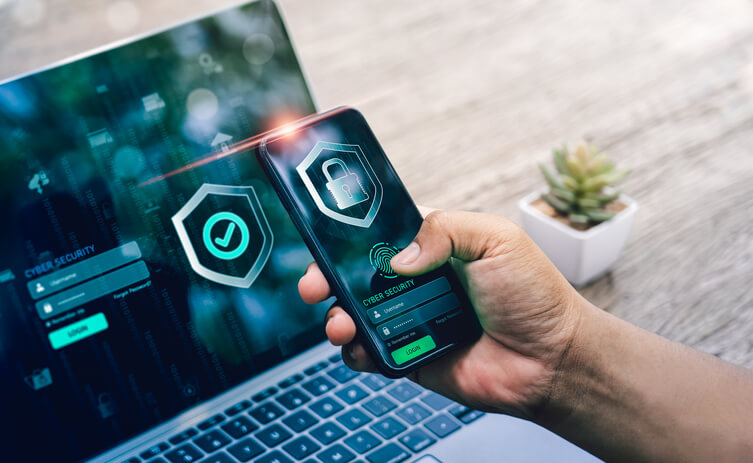
Passwords alone are no longer sufficient to protect sensitive business systems. Multi-factor authentication adds an additional layer of security by requiring users to verify their identity using a second factor, such as a mobile authentication app or security key. Enabling MFA on email accounts, cloud services, VPN connections, and administrative accounts significantly reduces the risk of unauthorized access, even if passwords are stolen.
Many cyberattacks exploit known software vulnerabilities for which security patches have already been released. Businesses that postpone operating system updates or ignore firmware and application patches leave themselves vulnerable to attacks that could have been prevented. Establish a structured patch management process to ensure operating systems, applications, firewalls, servers, network equipment, and endpoint devices are updated promptly. Automated patch management solutions can simplify this process while minimizing disruption.
Technology alone cannot stop every cyberattack. Employees remain one of the most common entry points for phishing emails, fraudulent invoices, malicious attachments, and social engineering scams. Regular cybersecurity awareness training helps employees recognize suspicious emails, verify unexpected requests, avoid unsafe downloads, and report potential threats before they become serious incidents. Periodic phishing simulations can reinforce good security habits and identify areas where additional education may be needed.
Some businesses mistakenly believe that cloud storage automatically provides complete protection against ransomware, accidental deletion, or hardware failure. Without verified backups, recovering critical business data after an attack may be impossible. A comprehensive backup strategy should include encrypted backups stored separately from production systems, regular testing of backup restoration procedures, and a documented disaster recovery plan that defines how business operations will continue during an emergency.
Older computers, servers, and networking equipment may no longer receive security updates from their manufacturers. Unsupported operating systems become increasingly vulnerable as newly discovered security flaws remain unpatched. Develop a technology lifecycle plan that replaces aging equipment before it becomes a security liability. Regular hardware refreshes also improve reliability and employee productivity.
Not every employee needs access to every system or file. Excessive user permissions increase the damage that can occur if an account is compromised or an employee accidentally deletes or exposes sensitive information. Implement the principle of least privilege by granting users only the access necessary to perform their specific job-related tasks. Regularly review user accounts, remove unnecessary permissions, and promptly disable accounts for departing employees.
Email continues to be the primary delivery method for phishing attacks, ransomware, and business email compromise schemes. Even well-trained employees can occasionally be deceived by increasingly sophisticated fraudulent messages. Advanced email security solutions can block malicious attachments, filter phishing emails, detect impersonation attempts, and reduce the number of dangerous messages that reach employee inboxes.
Cybersecurity has become too complex for most small businesses to manage without expert assistance. Threats evolve constantly, requiring ongoing monitoring, vulnerability management, security updates, and incident response planning. Partnering with a trusted managed IT services provider like KMF Tech gives your business access to:
You get all these benefits without the cost of an in-house IT department.
Cybersecurity is not a one-time project but an ongoing business process, best managed by seasoned professionals. KMF Tech can help you address vulnerabilities, educate your employees, maintain and upgrade your current systems, and implement layered security controls. With our guidance, your small business vessel can reduce any risk of cybercriminals boarding and taking your company hostage. Call us today.